The Essential Rideshare Expense Log KDP Interior for Modern Gig Workers
The gig economy has transformed how we work, turning vehicles into mobile offices and commutes into revenue streams. For drivers working with Uber, Lyft, or other rideshare platforms, meticulous record-keeping is no longer a mere suggestion—it’s a financial necessity. Yet, the tools provided often fall short. Scrolling through app histories or juggling digital notes can be inefficient, leading to missed deductions and tax headaches. This is where a professionally designed Rideshare Expense Log KDP Interior becomes a powerful asset, not just a notebook.
Beyond a Simple Notebook: Why Structure Matters for Drivers
Anyone who has spent a day driving knows the multitude of small costs that accumulate: fuel, tolls, parking fees, vehicle maintenance, phone data usage, and even that bottle of water for a passenger. Without a dedicated, structured system, these expenses scatter into memory and disparate receipts. A specialized log book built from a KDP interior template provides the framework. It transforms chaotic spending into organized, actionable data. This is crucial for accurate quarterly tax estimates, maximizing deductible expenses, and ultimately, understanding the true profitability of your driving hours.
The Evolution of Driver Tools: From App to Tangible Record
Initially, many drivers relied solely on their rideshare platform’s in-app summaries. While useful for tracking rides and fares, these summaries often lack granular detail for expenses. Digital spreadsheets offered a step up, but they require constant device access and can be cumbersome to update between trips. The renewed interest in analog, paper-based tracking speaks to a need for simplicity and focus. A physical log book, designed specifically for the task, allows for instant recording without pulling over, creating a reliable paper trail that complements digital records. The trend towards hybrid systems—using apps for income tracking and paper for expense logging—is growing among savvy drivers.
Key Features of a Professional Rideshare Expense Log Interior
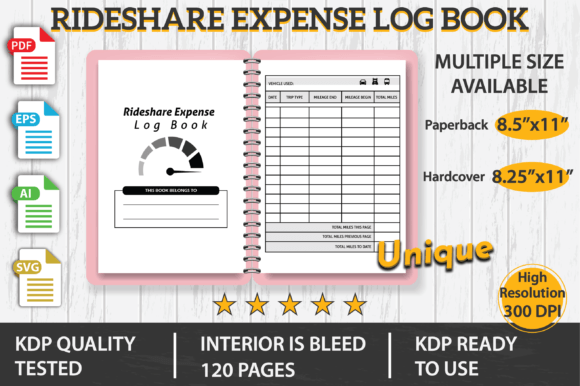
A high-quality interior is what separates a useful tool from a generic journal. The Rideshare Expense Log Book KDP interior is engineered for practicality and professionalism.
- Dimensions: At 6×9 inches (15.24 x 22.86 cm), it offers ample writing space while remaining compact enough to store in a glove compartment or bag.
- 120 Pages: This provides a substantial recording period, typically covering several months of active driving, allowing for a comprehensive financial picture.
- Professional Design: A unique, clean layout with clear sections for date, mileage, fuel costs, maintenance, other expenses, and daily totals guides the user effortlessly.
- Editable Source Files: Included formats like PDF, EPS, Ai, and SVG mean creators or drivers themselves can customize the template. You can change whatever you want—add a section for cleaning supplies or adjust the column headings for local tax requirements.
- KDP-Ready: The PDF file is tested and ready for upload to Amazon KDP with bleed and a high-quality, print-ready build, ensuring a flawless final product.
Practical Implications for Drivers and Content Creators
For the driver, adopting a structured log directly impacts financial health. It encourages consistent recording, which is key for spotting patterns—perhaps noting that fuel costs spike on certain routes or that a particular type of maintenance recurs. This data empowers better business decisions. For the entrepreneur or content creator on platforms like Amazon KDP, this interior template represents a market-ready product. It addresses a clear, underserved need in a growing niche. The inclusion of editable source files is particularly valuable, allowing for rapid adaptation to create derivative products, such as logs tailored for delivery drivers or couriers, tapping into adjacent markets within the gig economy.
Integrating the Log into a Modern Workflow
The most effective tools blend seamlessly into daily routines. A driver’s workflow might involve starting the day with a quick entry of starting mileage and fuel level, then jotting expenses immediately after each occurrence—a toll paid, a quick car wash. The log book becomes a central hub. At the week’s end, these entries can be easily transferred to a digital accounting software or tax preparation app, with all data already summarized. This hybrid approach mitigates the risk of losing digital data and the slowness of purely manual calculation. It creates a tangible, trustworthy record that satisfies both personal organization and potential tax auditor scrutiny.
Observations and Realistic Recommendations
Successful rideshare drivers often share a common trait: they treat driving as a small business. A business needs ledgers. Therefore, treating the expense log not as a hobbyist’s diary but as a business ledger is the recommended mindset. Use it diligently. Furthermore, for KDP publishers, observing the specific language and needs of the driver community is key. Marketing such a log should highlight its role in stress reduction during tax season and its function as a profitability analysis tool, not just a place to write numbers. The design’s professionalism signals its seriousness, aligning with the user’s intent to be professional about their work.
The demand for niche, practical printables on Amazon KDP continues to grow, driven by individuals seeking solutions to very specific modern problems. The Rideshare Expense Log KDP Interior exemplifies this perfectly. It is a response to the lifestyle shift towards flexible, vehicle-based income. It respects the user’s need for both analog simplicity and digital-compatible structure. Whether you are a driver looking to gain control over your finances or a creator looking to provide a valuable tool, this specialized interior design represents a thoughtful, grounded solution built for the realities of today’s gig economy.