The Ultimate Tool for Capturing Family Camping Memories
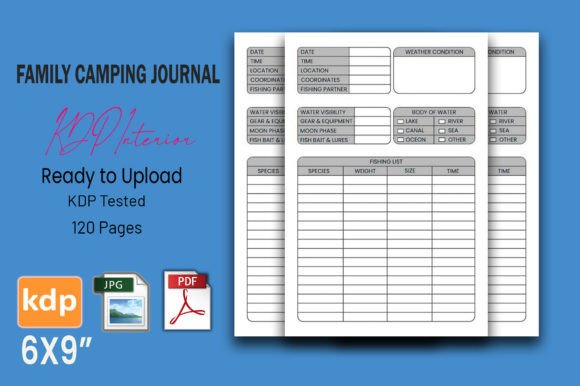
There is a magic to family camping that transcends the simple act of sleeping outdoors. It’s the shared laughter over a campfire meal, the quiet awe of a star-filled sky, the triumphant (or muddy) return from a trail hike. These moments are the glue of family stories, yet too often they scatter like leaves in the wind, forgotten over time. The Family Camping Journal KDP Interior is a purpose-built solution for creators and families alike—a 120-page, professionally designed template that transforms those fleeting experiences into a lasting, tangible chronicle.
Beyond a Simple Logbook: A Framework for Narrative
What sets this journal interior apart is its role as a structured framework rather than just blank pages. Its 6x9 inch trim size, tested for Amazon KDP, offers the familiar, portable feel of a perfect-bound book. The 300 DPI quality ensures crisp printing, while the no-bleed settings and ready-to-upload PDF format mean it is a turnkey product for publishers. But its true value lies in how it organizes creativity. It provides a canvas where logistics meet sentiment, where a checklist for supplies sits alongside a page for sketching the view from the campsite.
This duality is its core strength. For the entrepreneurial creator selling journals on KDP, it’s a high-resolution, KDP-tested asset that eliminates design guesswork. For the end-user family, it’s a guided yet flexible space that encourages more than just date-and-place entries. It prompts for details that fade fastest: the weather that changed the day’s plan, the unexpected wildlife encounter, the favorite meal cooked over the flame. This structure gently pushes users toward creating a rich narrative, not just a log.
Creative Applications for Diverse Users
The adaptability of the Family Camping Journal KDP Interior opens a spectrum of creative applications. It’s a starting point that can be customized, reinterpreted, and extended to serve various goals and audiences.
- For KDP Publishers & Entrepreneurs: This interior is a foundational product. It can be sold directly as a family camping journal. It can also serve as a template for a series—modifying headers and prompts to create specialized versions for "RV Travel," "Backpacking Adventures," or "National Park Tours." The included high-resolution JPG files allow for easy preview creation and marketing assets.
- For Bloggers & Content Creators: Use the journal’s structure as inspiration for a recurring blog series or social media content. Each camping trip documented in the journal can become a blog post, with the journal pages providing the outline and details. The prompts can fuel "camping memory" Instagram stories or YouTube vlogs, adding depth and consistency to outdoor content.
- For Educators & Group Leaders: Adapt the concept for outdoor education or scout groups. The pages can be used to create a group trip record, teaching children observation and reflection skills. It becomes a collaborative project, culminating in a printed copy that serves as a trip report and memory book for all participants.
- For Families & Hobbyists: The most direct use is as a personal archive. But creativity here means personalization. Families can add their own photo pockets, use colored pencils for the sketch pages, or dedicate sections to each child’s quotes. It can evolve into an annual tradition, with one journal per year, creating a comparable history that highlights growth and change.
Balancing Inspiration with Practical Guidance
A successful project, whether you’re publishing or preserving memories, requires a balance of creative freedom and practical organization. The journal interior provides the organizational skeleton; the user provides the creative flesh. To keep results effective and audience-friendly, consider these grounded approaches.
Consistency is Key for Series: If you’re a publisher creating a line of journals, maintain consistent layout elements—font styles for prompts, page numbering, section order. This builds brand recognition and user trust. For families, consistency might mean always filling the "Trip Highlights" section on the last evening of the campout, making it a ritual.
Originality Through Personalization: Avoid generic content by leaning into specific prompts. Instead of "What did you see?" encourage "Draw the most interesting insect you found." The journal’s design includes space for such specificity. For publishers, you can customize these prompts for niche audiences—for example, anglers might want a page for recording fishing spots and catches.
Audience-Friendly Design Thinking: The 6x9 size is practical, but think about your end user’s experience. A family journal should have ample space for children’s larger handwriting or drawings. A journal marketed to minimalist backpackers might need a more condensed, efficient layout. The high-quality 300 DPI files ensure that whatever customizations you make will remain sharp and professional in print.
From Digital File to Tangible Legacy
The journey of the Family Camping Journal KDP Interior from a downloadable PDF to a physical object encapsulates its utility. For the KDP seller, the process is streamlined: upload, set pricing, and publish. For the family, printing the journal and binding it—or having it printed via a service—transforms digital planning into a real artifact. This tangibility is crucial. A filled journal becomes a family heirloom, more evocative than a folder of digital photos because it contains concentrated, curated narrative.
Consider the realistic example of a family using the journal over five years. The first entries might be simple, maybe just filled by the parents. By the fifth year, the children are contributing their own sketches and notes. The journal becomes a measurable record of their growing engagement with nature and their developing expressive skills. For a content creator, a series of journals filled on different trips provides a ready-made archive for writing a book or creating a documentary-style project about their camping life.
Exploring Variations and Extended Project Ideas
The inherent flexibility of this interior invites exploration beyond the standard camping trip log. Here are practical project ideas that stem from the core concept.
- The "Camping Skills & Gear" Evolution Journal: Reconfigure sections to track skill progression and gear reviews over multiple seasons. This turns the journal into a practical manual for the family, noting which tent performed best in rain, or how fire-building techniques improved.
- The Collaborative Guest Journal: For families who camp with friends or at large group sites, leave pages open for fellow campers to contribute. This creates a multi-voice snapshot of a shared experience, enriching the memory with different perspectives.
- The Seasonal Observation Guide: Focus the journal on nature observation. Dedicate pages to cataloging flora and fauna seen in different seasons and locations, turning camping into a scientific exploration and the journal into a field guide.
- The Creative Writing Prompt Book: Use the scenic prompts and blank pages as a foundation for creative writing. The "Describe the night sounds" prompt could lead to a poem; the sketch page could inspire a short story. This appeals to the educator, writer, or family focusing on literary arts in nature.
The Family Camping Journal KDP Interior is more than a product template; it’s a catalyst for organized creativity. It meets the practical needs of online publishers with its tested, ready-to-upload format, and it meets the emotional needs of families and storytellers by providing a beautiful vessel for their adventures. Its value grows not from hype, but from its silent function: to ensure that the crackle of the fire, the chill of the morning air, and the shared joy of discovery are not just experienced, but remembered, in clear and lasting detail.